What have you learnt about technologies from the process of constructing this product?
In the making of my thriller film, I learnt a lot about the technologies that go into constructing a proffesional looking sequence. I used these technologies to my advantage in order to make my video as good as possible.
 The video editing software I used was Final Cut Express 4. This is a professionally used program specialising in the creation of high quality videos. It enables you to include many different video and audio effects/transitions, and is very versitile in enabling you to manipulate media in your timeline or even applying video filters. One I was done editing my video, I could export it in a variety of different formats and resolutions. I chose to export my thriller in the maximum 1080p resolution in a H.264 format that is YouTube friendly. With Final Cut I was able to create my film exactly how I had invisaged, and found the program a pleasure to work with despite its few flaws.
I also used Adobe After Effects CS4 and Soundbooth CS4 in building my video. I used after effects primarily to create animated text overlays and credits. It offered a collection of different animated transitions to choose from, that allowed me to create text that fitted the mood of the film. I also used After Effect's stabilization funtions to reduce unwanted shaking within some clips. Adobe Soundbooth I used for audio manipulation. I could add echos, reverb, and a whole host of other effects to the audio just in a few clicks of a mouse. An example of what soundbooth enabled me to do was at the very end of my opening, where the audio echo's to a silence. This effect was created on Soundbooth.
 During the constrution of Breath, I also learnt much about video itself. Different video formats and frame rates gave me many hurdles to overcome when filming and editing my film. The first step I made was to make my DSLR camera to record in 29.9 fps MP4 format in prefference to AVCHD, as it was less compressed and more editing/conversion friendly. When editing I found it very beneficial to convert the MP4 files into Apple Intrmediate codec. I did this to save time when editing, as rendering is not required in Final Cut when working with AIC files. Finally I exported my video in 24fps H.264 format as it was a streamable file format accepted by YouTube. Before constructing Breath, I never knew there were so many variations of video formats. I learnt that each format has its own characteristics, and some are more suitable than others depending on the task.
Filming my thriller also gave me an oppertunity to experiment with lighting. I found the correct lighting to be very important to the quality of the final product. Fortunately, much of my footage was shot outside on a rather sunny day, therefore light was adequete for filming. Inside however, artificial lighting was required. Not only did this make it easier for the audience to see what was going on, it also reduced visual noise and improved the quality of the image. Looking back at the beggining of my video, indoor scenes could have done with a bit better lighting, but this learning curve I can use to improve my future projects.
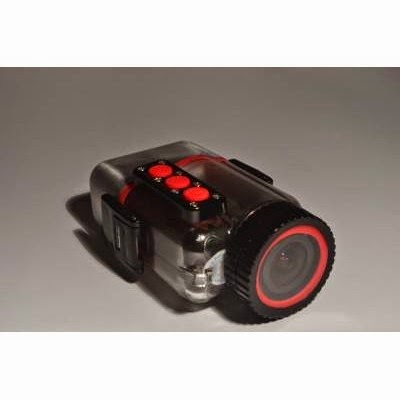 When filming Breath, I used a variety of equiptment to get just the right shots and angles. One of my most interesting peices of equiptment was my Mobius Actioncam in partnership with its custom made waterproof casing. The tic-tac box like size and shape of the camera made it perfect to acheive great action shots not possile with most other cameras. All shots on board the bike were filmed on the Mobius and was ofcourse used for the final, underwater shot. The versitility of the camera and the mounts it could be used with meant I could attach it to pretty much anything. Velcro mounts, headcam mounts, suction cup mounts and handlebar mounts are just some of the attachments I used to acheive certain angles. Despite its small size, it films in full 1080p at 30fps or 720p at 60fps, which is more suitable for extremly fast action.
Despite the actioncam being key in getting certain shots, it was not suitable for everything. When filming off the bike, I chose to record with my DSLR camera instead. Although recording in the same resolution, it provided more megapixels and a better depth of field, along with more pratical reasons like the fact you can instantly watch back your footage and it was easier to get a steady shot.
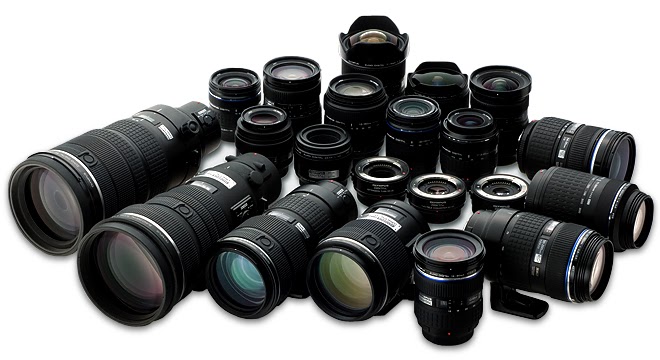
Another concideration I made was which lens I decieded to use for each shot. I used two lenses for my DSLR in my thriller opening. There were an 18-55mm and a 75-30mm teloscopic lens. My judgement was based on how far away the subject was, how still the camera needed to be and how much depth of ield was reccomended. Whilst the telescopic lens allowed me to zoom into objects from a lot further away and gave the shot a further depth of field, it also caused a very small judgement of error when stabilizing the shot, meaning one small jolt could ruin an entire shot. This problem worsens as you zoom further and further in, despite the cameras built-in stabilisation features. The majority of the shots were taken using the 18-55mm lens, as my subjects were generally close to the camera and I could capture wider angled shots, hence it was more suitable for the occasion.
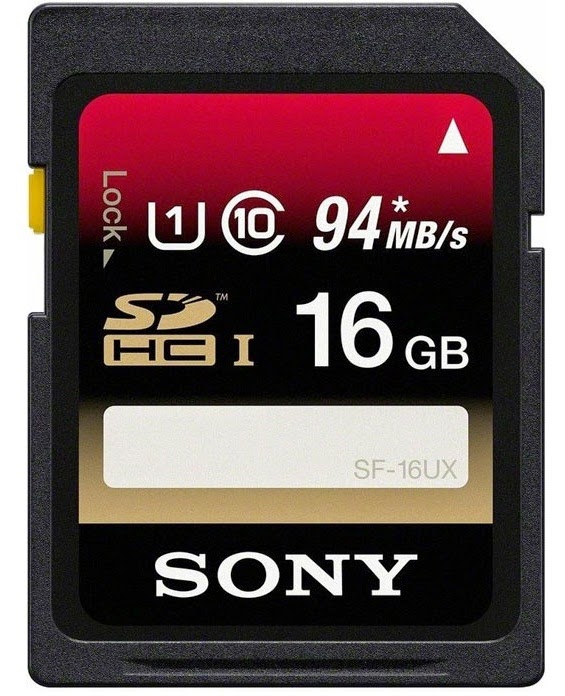
Finally, I had to make whilst filming my thriller opening is the memory of which I would store the footage on. I opted for a 16gb high speed SD card in my DSLR, and a class 10, 8gb mico SD in my mobius. This provided me with more than enough space to hold my footage and I could easily transfer the data from the cards to my computer at high speeds.
