Showing posts with label Thriller Analysis. Show all posts

Tuesday, 4 February 2014

The Usual Suspects Analysis

In this analysis I will be looking at the 1995 film, The Usual Suspects. This highly rated picture is a Crime/Mystery thriller, full of twists and turns sure to get you chilled to the bone. Starring Stephen Baldwin, its has an average film rating of 8.7, putting it in the top 500 films of all time. I will be looking at the opening of the film, from the entire extract provided at the bottom of the post. I shall be specifically looking at four micro-elements; mise en scene, camerawork, editing and sound. In each point I will be referring to pictures found toward the bottom of the article.

 The scene begins in a very dark and aery location. Although we can see very little in the shot, we hear and notice a man, lighting matches in order to light his cigarette (Picture 1). This seems to be the only source of light in the picture, but is enough to get an idea of what the man looks like. The scene does not give much away and leaves an enigma of unanswered questions despite being at the very beginning of the opening. As the camera slightly pulls out, we see seemingly uncontrolled flames in the background, creating a sense of danger.

Following on from the first few seconds, the man then throws his flaming matches on the floor beside him, which to our surprise ignites a rope. The camera then tracks the path of the rope, and we watch the flames progress in its journey (Picture 2). Throughout this and the previous scene, a non-diegetic and dramatic violin soundtrack is played in the background, creating a gloomy setting for the already dark location.

As we continue to watch the rope set alight, the flames illuminate a clear image of a dead, lifeless body in the background (Picture 3). This is of obvious significance, and raises yet more questions. Who is he? Why was he killed? Who killed him? At this point, we can only presume the man who had just lit his cigarette is the killer, but in fact, we later find this is not the case. The inclusion of this shot is a clever one, as it builds up to the situation in hand. Its a little hint of the story line.

We then get a close-up shot of the still progressing flames (Picture 4). as they creep towards the camera, a clear liquid is poured over the rope from above and the diegetic sound of it splattering onto the ground below, in order to douse the raging flames and stop them in their path. The camera then pans upward to show the silhouette pouring the liquid from the raised balcony. Instantly his higher position shows his dominance and power over the man below. The man on the balcony of which we know nothing about, is cast in a very mysterious way,which gives the viewer the impression that he is in fact the villain in this scene.

We then cut back to the man previously seen at the start of the opening, who is now looking weak and tired, hanging his head whilst watching his attempt at killing himself intercepted and quite literally, fizzle out (Picture 5). Contrary to the viewers previous thoughts, the man pictured from the very start of the scene seems to have very little or no power at all in this situation. As the mysterious man walks down the series of steps to approach the man below, the weak man asks "What's the time?" Of which the mysterious man replies "12:30", and soon after, "Are you ready?". The man looks up to the mysterious one, eventuates the division in power. Through a close up of the helpless mans face shows, he seems to have little hope left and knows his fate will be the same as the dead man seen earlier on.

In the next shot, the man of which we still know nothing about, pulls out his pistol and points it at the vulnerable and injured man (Picture 6). This proves the man fears were right, and proves who killed the dead man seen in the previous scene. The mysterious man is confirmed as the villain, as we wait to hear the loud bang of the gun being fired. As this happens, we cut to an establishing shot of the outside of the boat they are in, and a montage like series of cuts give us an idea of the scenery around the location. We see very little aftermath of the gun shot. Its also relevant to point out we have yet to, and don't see the villains face, and know almost nothing about him other than that he is a ruthless killer.

As we return inside the boat, immediately after the drama has taken place, a close-up of the murderous protagonists hand, dropping his lit cigarette to re-light the fire he earlier put out (Picture 7). The reflective shine already on the floor suggests that some kind of lighting fuel has been used to encourage the fires spread. This ignition causes the rope to once again light.

Once again the camera follows the fire as it progresses down the rope (Picture 8). We experience some kind of Da Ja Vu, as the scene seemingly replays the earlier one, as the flames illuminate the newly dead body, only this time it is the victim seen throughout the first half of the opening. From this we get a sense that there are more victims to the crazy murderer, yet we still do not know why he has killed these people. This nagging question remains unanswered throughout the opening scene.

The opening concludes with a mighty explosion, as the flaming rope reaches its explosive target (Picture 9). This only adds to the deadly mayhem and confusion as to whats going on. This is what makes the opening successful, as the only way to answer these questions is to continue watching the movie. This is what the opening aims to do, and can be the key to a successful film.

1.

2.

3.
 4.

5.

6.

7.

8.

9.

  Extract

Tuesday, 28 January 2014

Memento Opening Analysis

Memento is a mystery thriller released in 2000. Staring the likes of Guy Pearce, Carrie-Anne Moss and Joe Pantoliano, the film is based on a Jonathan Nolan story and is Directed by Christopher Nolan. Nominated for 2 oscars, its a highly acclaimed film with some interesting and unique attributes, as the opening proves. In this analysis I will be looking at the camerawork, editing, sound and mise en scene throughout the opening 2 minutes of the film, using pictures (found at the bottom of the post) to help explain my point, along with the film extract. The following takes place from 0:00 to 1:43 of the extract.

The beginning of the film opens with a hight angle shot, looking down at a small, square, fully developed picture (Picture 1). Looking closer at the pictures content, we see it portraying a gruesome scene, with blood splatters surrounding lifeless man lying on the floor in his blood. Dramatic violin music plays to reflect the horror and violence seen in the picture. The non-diegetic music is soon accompanied by the diegetic sound of the photo being shaken. At this point we know very little about why and how this scene has occurred, or even anything about the person holding it other than their white ethnicity. Throughout this scene, the opening credits are displayed in the foreground.

The opening continues in its uneventful manor, as we continue to view the very same photograph. These types of photographs usually become clearer and more vivid as time passes. In this scene, we notice that as time passes, the picture becomes more faded and difficult to see (Picture 2). The person holding the photograph shakes it, only for it to become even more difficult to see, as we watch the image slowly fade away.

As more time passes, the camera is still yet to move and the dramatic, violin music still plays. The continuation of the photographs fading now shows a completely blank space where it used to be (Picture 3). From this the viewer can soon realize that time is in fact reversing. It gives the sense that the memory of the scene is slowly fading away, which strongly relates to the films entire story of memory loss. From 0:00 to 1:10, just one camera angle is used and no editing excluding the opening credits. This creates many questions from the viewers point of view, but is yet to answer any. Up to this point have not seen anything except a fading photograph and a hand.

From 1:10 onwards, we start to get answers to some of these questions. The story line begins to develop as we see the now blank picture, going into the camera that has just taken it (Picture 4), followed by a flash of light to signify the picture being taken accompanied with the diegetic shutter sound. We follow the persons hand as feeds the photograph back into the camera, whilst still not revealing their face. The violin soundtrack finishes in replacement for a more subtle yet aery, high pitched tune.

The camera then pans upward to finally reveal the persons face (Picture 5). From the short close-up of their face, we can tell that he is a man, and notice his battle-scarred face. His cheeks and eye area are ridden with scars, presumably caused by being involved in a fight. From this presumption we can link the conflict caused scars with the bloody scene from the picture. The dark lighting positioned on his face creates a mysterious image to the character, in which we know little of.

We then cut to a shot of a stream of blood, climbing up the wall (Picture 6). despite not giving much away, we instantly link this shot with the blood seen on the picture. From the different close-up shots shown in series, we gather and build up a good idea of the scene, which we saw through a kind of, 'establishing shot' from the photo the man took. We then get a birds eye view of the body, lying in its own pool of blood (Picture 7). Its clear to see the man lying face down to the ground has suffered a fatal blow, but we do not yet know who is the culprit for his death.

After another collage of scene setting shots, cutting from one to another, the camera focusses on a shell of a bullet (Picture 8). As the viewer distinguishes what the object is, the shell starts to circle and eventually lifts. Bullet shells are produced after a gun shot has been fired, hence we then realize how the man was killed. As the opening is played in reverse, the viewer is also given just enough time to gather we are about to witness the shooting. The non-diegetic sound quickly become increasingly loud, building the anticipation for the gunshot and drama which is about to unfold.

The final notable shot of the opening 2 minutes is of the scarred man shooting the gun into the neck area of the mustached man. Though we do not know why he has shot him, we get a good understanding of how the scene would be played not in reverse. The gun produces a flash, just after we saw the bullet shell previously on the floor, enter the weapon. The swift, and quick cuts in the editing builds up the tension for finale to the opening. The scene ends with the groan of agony made by the later dead man as he is shot dead.

1

2

3

4


5

6

7

8

9


Extract - 0:00 to 2:00

Tuesday, 21 January 2014

Silence of The Lambs Analysis

Silence of the lambs is a well known and highly rated film released back in February 1991. Directed by Jonathan Demme, the thriller is based on the Thomas Harris novel and Ted Tally screenplay. I will be discussing the mise en scene, editing, camerawork and sound within the opening sequence of the movie, using screenshots to demonstrate my point.
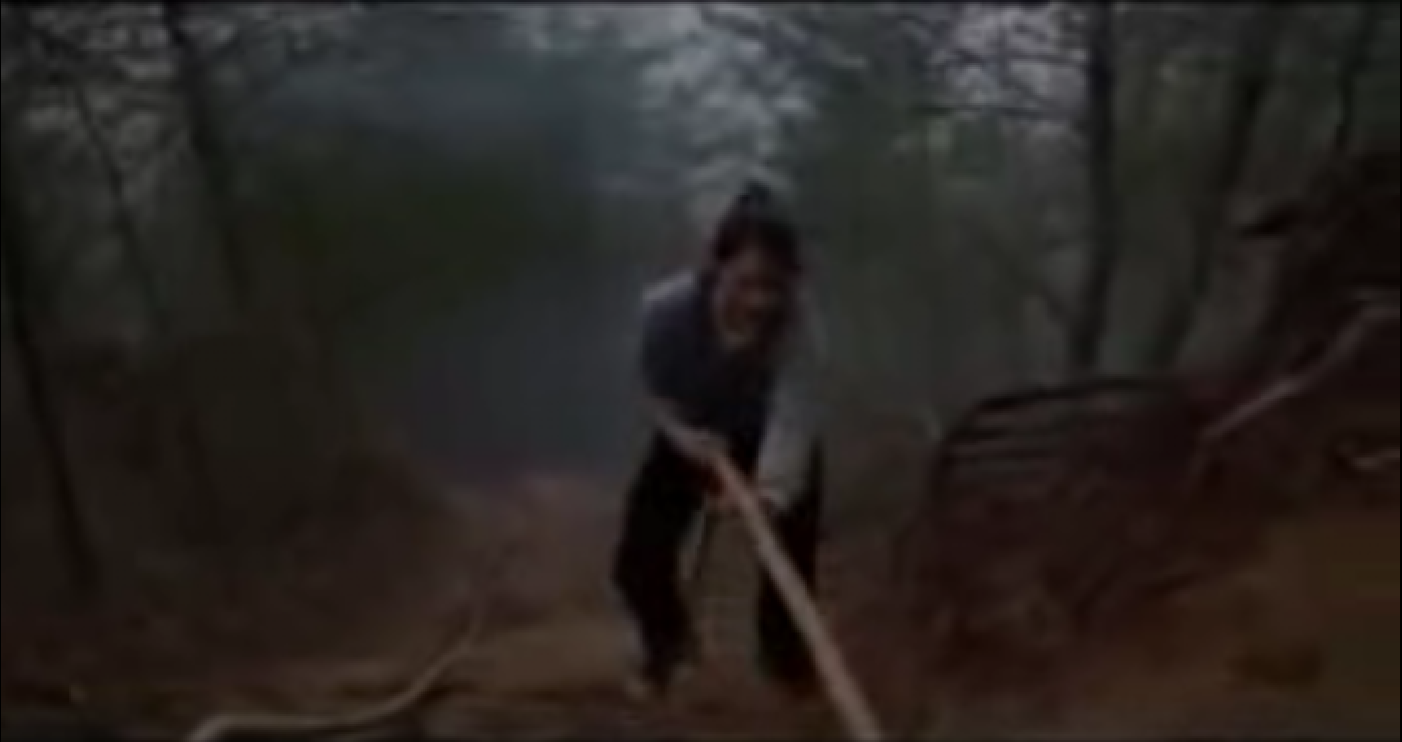
 The film opens in amongst some trees. We find ourselves in a forest, setting a typical wary scene for the thriller genre. The camera pans downward to reveal a woman running through a forest, using a rope to assist her up the hill (Picture 1). Immediately we presume she is being chased by a phyco killer, using her character as a woman to show her vulnerability. We hear birds and wildlife in the background, along with the panting of the woman. In the next couple of shots we follow her through a tracking shot. The camera is handheld and shaky to accentuate her speed through the forest along with the fast paced continuity editing whig supports this argument (Picture 2). 

At this point the viewer is still using their knowledge of previous thriller films to come to the assumption that she is on the run from danger. The next shot (Picture 3) reveals that these assumptions are false as she comes across netting. From this we gather she is intact completing an assault course. This comes to us as a surprise, as it goes against gender stereotype so often found in this genre. Whilst women are typically shown as weak, vulnerable and frightful, this character represents strength, courage and determination. We get a good look at her sweat stained jumper giving us some time perception as to how long she has been running for, and again reinforcing the elimination of the stereotypical woman image. As we watch her continue the assault course (Picture 4), we hear the deep voice of a man, addressing the woman as 'Sterling'. The fact that she is referred to as her surname gives her some level of importance and respect. This respect is shared between the two, as she replies 'Thank you, Sir'. Evidently this is a formal conversation, again adding to its importance. 

At the conclusion of the conversation between the two characters, we get a close up of man, wearing a fluorescent yellow jacket (Picture 5). This single close up reveals a great deal as to what they are doing there and why. As the camera zooms into the mans face we notice the big, bold letters on his cap which spell 'FBI'. This shot is used to give the viewer more understanding of what is happening in the previous and following scenes. We can tell from this single shot that both man and woman are apart of the Federal Bereau of Investigations, completing a training course. The vertical pan that follows, show four signs; Hurt, Agony, Pain, Love-it (Picture 6). This highlights the attitudes and traits that are taught in the camp and what Ms Sterling is made of.

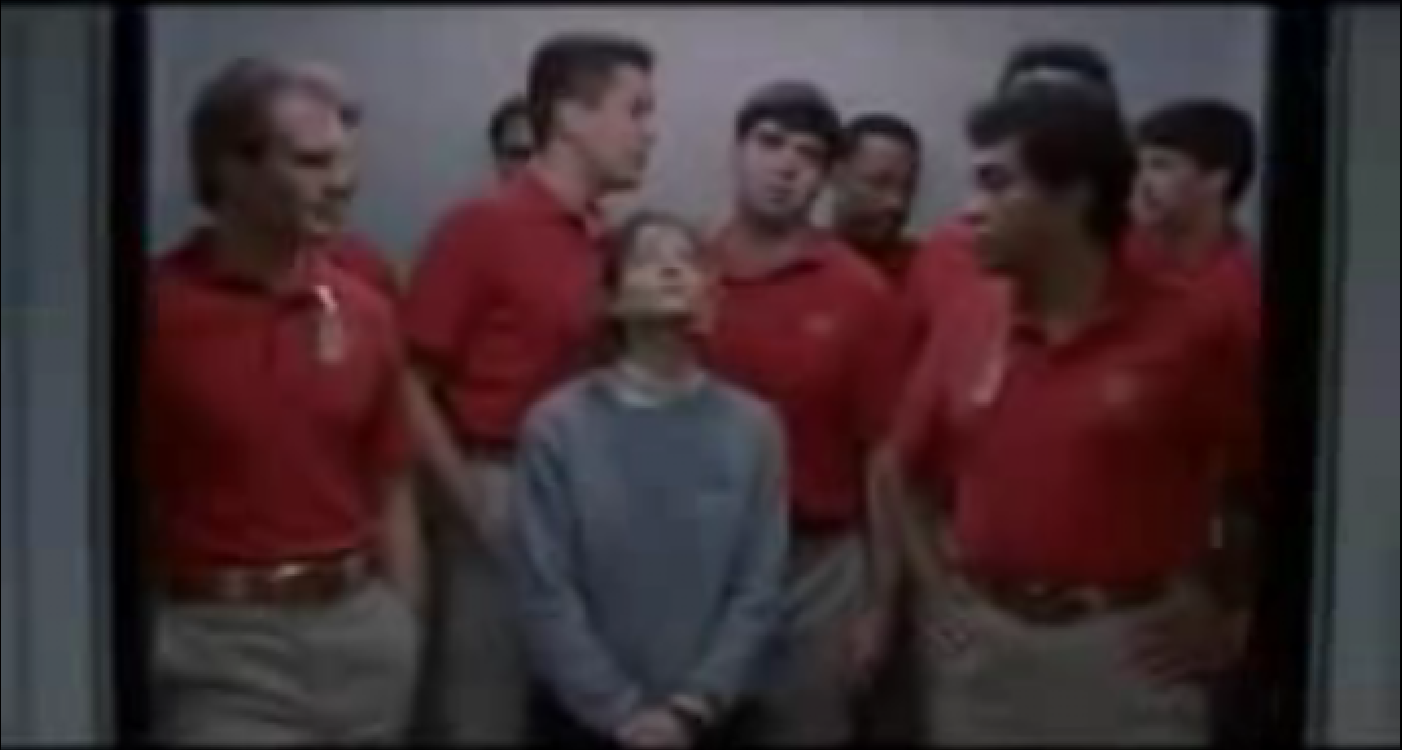
We soon cut back to the woman, jogging into the large, modern looking building (Picture 7), going past other trainees in the man time taking part in their drills. This sows she is one of many people taking part in these exercises, but the viewer can already tell that Ms Sterling is a character of significance as the camera has been following her movements from the very beginning. Now inside the building, we get an interesting shot of the woman walking into an elevator amongst nine, much taller men wearing the same uniform (Picture 8). Despite her comparatively small stature, she seems unfazed by them, and as we see in the next shot (Picture 9), we notice that she walks out of an empty elevator onto her floor. This demonstrates the passing of time and shows that the other men departed on a lower level, possibly showing the importance of the person (Mr. Crawford) she has been invited to talk to.

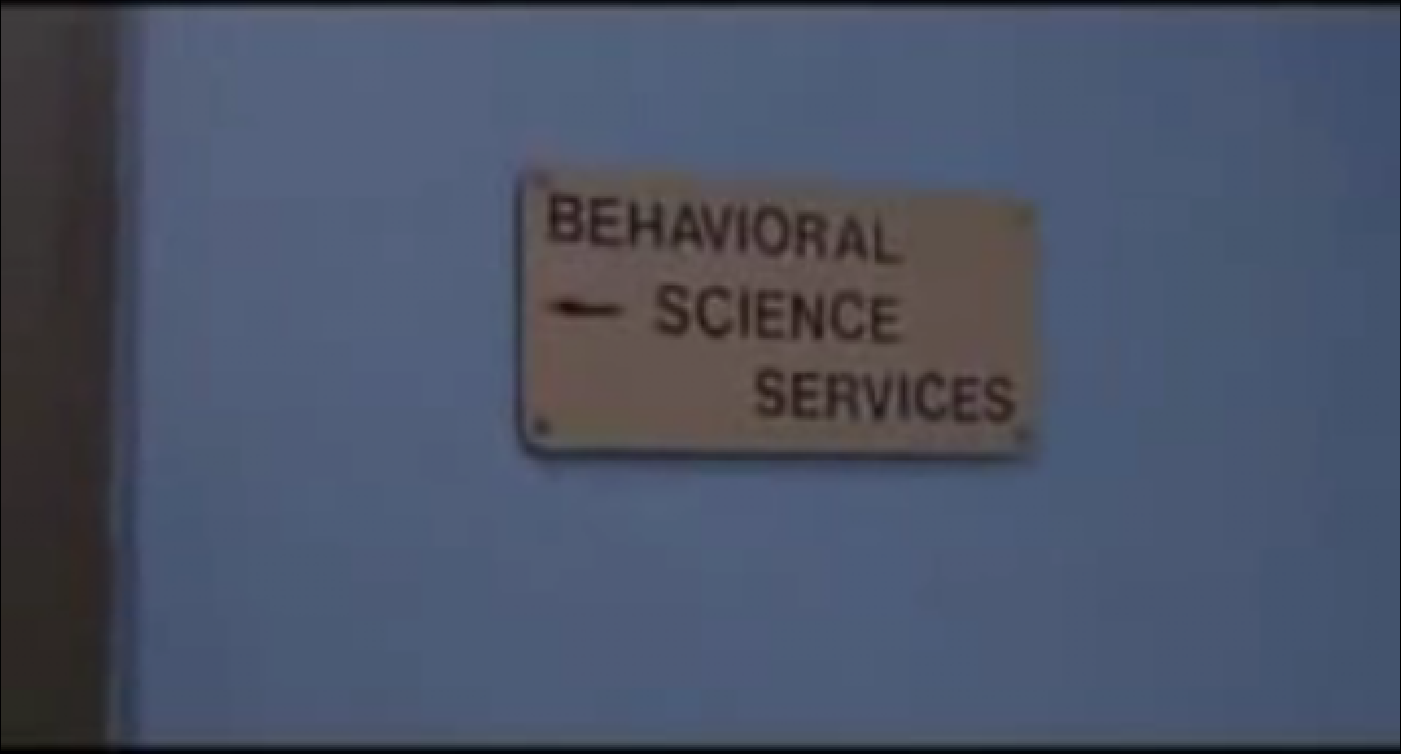
Shortly after exiting the lift, the camera focusses on a sign on a door which states 'Behavioural Science Services'. This is a clever shot to tell the viewer in what department they are currently in without the use of sound. From the shot we can tell exactly where we are in the building. In the concluding scene of the opening, Ms Sterling walks into Mr. Crawfords empty room. Her wandering eyes come across a wall, plastered with news articles and gruesome pictures of abused bodies (Picture 11), after a close up of the woman's shocked reaction. The non-digetic background music adds to the dark nature of the articled events, as the camera pans to reveal an ever growing collection of pictures and articles documenting a phyco killer. The final shot of the opening shows the arrival of Mr. Crawford. The camera defocuses on the woman in the foreground to show Mr. Crawford in clarity, suggesting his high level of importance.
1
2

3

4

5

6

7
8
9

10


Wednesday, 15 January 2014

The Machinist Analysis

The Machinist is a popular 2004 phycological thriller. From the opening five minutes, many questions are raised about the main character, Trevor Reznik. Is he the hero? Is he the villain? Why is he disposing of a body? Why do we sympathise with him? and as the highlights, who is he?

 0:33
 From the very beginning we see an out of focus male figure through the glass, rolling a dead body in some kind of carpet. It becomes clear that he has killed this person, and now covering it up ready to dispose of it without suspicion.
1:16
 The next notable shot is a clearer image of the mans face. The close up reveals cuts and bruises to his face and his psychotic, traumatised look. We begin to sympathise with him as we see he has been through some tough times, struggling to do any activity. He lights his cigarette whilst staring outside the window in a thoughtful way. The title of the film is shown beside his face.
1:46 

We then cut to a scene where Trevor is now carrying the body, now rolled in some kind of blanket. We see him desperately struggle to carry the body, and through his pained look and facial expressions, we feel his agony, making us further sympathise with him.

2:10 
Through a point of view shot, we can see a torch light in the distance growing bigger and bigger. We cannot see their face nor body, yet Trevor Reznik  quickly attempt to get rid of the body in a panic, knowing the consequences of getting caught, although his attempt did not fully dispose of the body.
2:25 

Trevor's second attempt at dumping the body also proved unsuccessful. After conjuring all his might he kicks the body down the gradient, only for it to unravel on full show. The emotion on his face shows us his frustration and disbelief that the body wont roll into the water, never to be seen again.

2:41
We voice saying "Who are you?". Trevor turns around with a face of horror at what he sees. A close up is used to show the terrified emotion on his face as he looks at the man holding the torch's face. We can only presume that Trevor knows this man, but by the sound of it, the feeling is not mutual.
2:28
The next shot defocusses away from Trevor washing potential evidence off his hands, to the torch we saw earlier in the foreground. This raises many questions in the viewers mind as the torch obviously has some kind of significance. How did he get the torch? Did he kill the man?
3:26
Frantically washing his hands after the incident, Trevor noticed a yellow post-it note behind him in the mirror. When he turns around we get a shot through his eyes. 'Who are you?' the note says, the very .same question the man with the torch asked.

Extract (0:00 to 3:28)